Forensic File: the role of the Police Community Support Officer
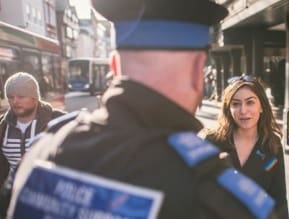
In the UK, the ‘bobby on the beat’ who travelled on foot and knew his/her patch, the shopkeepers, villains, hot spots and helpers like the back of his hand gradually dwindled as more officers were in cars, racing to 999 calls. The general public were dismayed by this reduction in visible law enforcement and perceived reduction in standards, so in 2002, PCSOs were introduced to fulfil this role.
They are members of the police but they are not Warranted, which means they do not have the power to arrest someone, although they do have the power to detain. They wear a similar uniform to warranted officers, but usually with a distinctive blue stripe around their caps/helmets.
PCSOs are not armed or taser-trained (except in Northern Ireland where all officers are armed because of being perceived as a ‘legitimate target’ by the IRA).
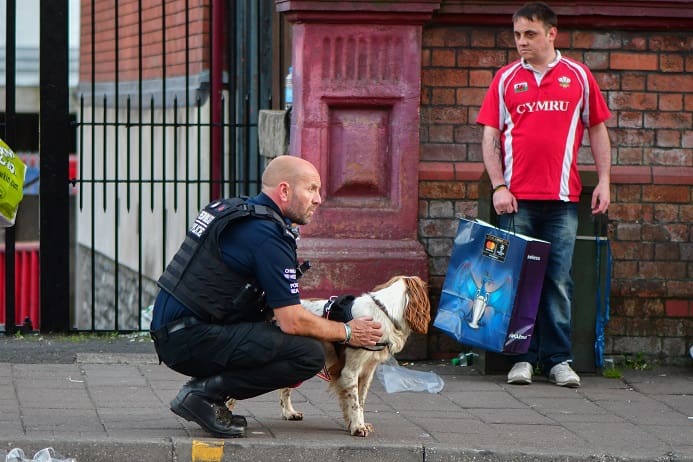
Most of their travel is on foot or bicycle, walking the beat and getting to know their communities, working closely with the Neighbourhood Policing Team. Day-to-day duties usually patrolling, tackling anti-social behaviour, dealing with minor offences, crowd control and directing traffic at public events, helping direct traffic at roadblocks or scenes of accidents, gathering criminal intelligence, and supporting front-line policing.
Some PCSOs had a rough welcome from warranted officers in the early days, even being called ‘hobby bobbies’, but are now appreciated for the role they provide.
One PCSO I interviewed referred to the difference in roles as ‘engagement V enforcement’. She sited an example of working with a gypsy and traveller community where she was able to build trust and keep open lines of communication, even during an investigation by police.
She also explained, “there is more than one type of justice”. For example, when working with the Immigration Enforcement Team, in Plymouth investigating illegal labour in restaurants and takeaways, she would attend the raids. “I had no power to enter but I would go with team and block the doorway while Immigration used their Warrants.” While other agencies investigated whether a crime had been committed, she would look at the living conditions: was it overcrowded? were workers sleeping in store cupboard? Did they have bedding? Was there adequate lighting in the case of an emergency, and was the only exit through the kitchen? Were there smoke detectors? Was the fire exit blocked? “And they could be exploited because they’d pay £650/month to share a bedroom.”
And with food hygiene violations such as “noodles left next to a men’s toilet with chicken defrosting in the hand basin,” she can get the business owners over compliance/protection.
“It’s put me off takeaway food – the workers are exploited, and it’s not as if the customer is getting cheaper food.”
There are 6,267 PCSOs in the UK, with 172,700 police officers (although approximately only 117,000 are frontline officers).
Too often undervalued, underpaid and under-appreciated, PCSOs can be the eyes and ears of police forces. Expect to see one in DEAD GROUND!